
How to Build a Home Bar You Will Actually Use
There is something special about offering someone a drink in your own home. You do not need a marble counter, a wall of expensive bottles, or the skills of a professional bartender. Sometimes good hospitality looks like a favorite bottle, a bowl of fresh citrus, and enough ice to keep the conversation going.
A home bar matters because it creates another place to gather. It might hold a bottle from a memorable trip, glassware passed down through your family, or the ingredients for the cocktail your friends request every time they visit. Those personal touches give the space character.
I also believe a home bar should serve your real life. If you love Margaritas, build around tequila. If you prefer wine, give your bottles and glasses most of the available space. If you do not drink alcohol, create a thoughtful zero-proof bar instead.
The goal is not to own everything. It is to build a useful, welcoming space that feels like you.
Table of Contents
Choose a Home Bar Location That Fits Your Life
Begin with the space you already have. A sideboard, kitchen cabinet, bookshelf, rolling cart, or sturdy tray can become a functional bar. You do not need a dedicated room.
Choose a location away from direct sunlight and large temperature changes. It should be easy to reach while you entertain, but not so exposed that bottles and glassware are always in danger of being knocked over.
Measure the area before buying storage. Check the height of your tallest bottles and leave enough room for tools, napkins, mixers, and glasses. Attractive storage is only helpful when your supplies fit inside it.
A rolling cart works well for renters and smaller homes. If you need more inspiration, explore these small-space decorating ideas before buying new furniture. A built-in bar can make sense for homeowners who entertain often, but it requires more planning. Consider lighting, outlets, plumbing, and an easy-to-clean work surface.
Start with function. Once the setup works, you can add artwork, vintage glasses, a lamp, or a handsome tray that makes the space feel complete.
Decide What You Actually Like to Drink
Before stocking your home bar, think about what you normally order when you go out. Your habits should guide your shopping list.
Tequila deserves priority if Margaritas and Palomas are your favorites. Whiskey makes more sense if you enjoy Manhattans and Old Fashioneds. Someone who usually drinks a Gin and Tonic does not need three bottles of rum simply because a generic checklist recommends them.
Set a budget before shopping. A modest starter budget can cover several base spirits, a few supporting ingredients, mixers, basic tools, and multipurpose glasses. Reliable mid-priced spirits often work beautifully in mixed drinks.
Read the label before buying an unfamiliar bottle. Distilled spirit labels identify the type of spirit and its alcohol content, among other information. The Alcohol and Tobacco Tax and Trade Bureau’s labeling guide explains what appears on bottles sold in the United States.
Build your collection slowly. Every bottle should help you make something you enjoy. This keeps costs down and prevents a mysterious liqueur from becoming a permanent, dusty roommate.
10 Home Bar Essentials Worth Buying
1. Three or four base spirits. Vodka, gin, tequila, rum, bourbon, and rye are versatile choices. Start with the spirits used in your favorite drinks instead of purchasing all six.
2. Sweet and dry vermouth. These wine-based ingredients appear in classics such as the Manhattan and Martini. Refrigerate them after opening.
3. Orange liqueur. A bottle of triple sec or another orange liqueur helps you make Margaritas, Cosmopolitans, and Sidecars.
4. Aromatic bitters. A few dashes add depth to an Old Fashioned, Manhattan, and many modern cocktails.
5. Practical mixers. Tonic water, club soda, ginger beer, cola, and sparkling water cover many easy drinks. Small containers help preserve carbonation.
6. Fresh citrus. Lemons and limes give cocktails balance and brightness. Fresh juice usually tastes better than its bottled counterpart.
7. A cocktail shaker. Choose a cobbler shaker for simplicity or a Boston shaker for speed and versatility.
8. A jigger. Careful measurements produce balanced, consistent drinks. Guessing is fun until the second cocktail tastes nothing like the first.
9. A bar spoon and strainer. These tools cover stirred and shaken cocktails without taking up much room.
10. Dependable ice. Standard cubes work for shaken drinks. Larger cubes melt more slowly in spirit-forward cocktails.
Visit our cocktail recipes to decide which ingredients will work hardest in your home bar.
Choose Glassware and Storage With Care
Specialty glasses are tempting, but they can consume valuable cabinet space. Begin with a few versatile styles.
Rocks glasses work for neat pours, Old Fashioneds, and other short drinks. Highball glasses suit tall mixed drinks. Coupes or Nick and Nora glasses work for cocktails served without ice. Universal wine glasses can handle red, white, and sparkling wine when space is limited.
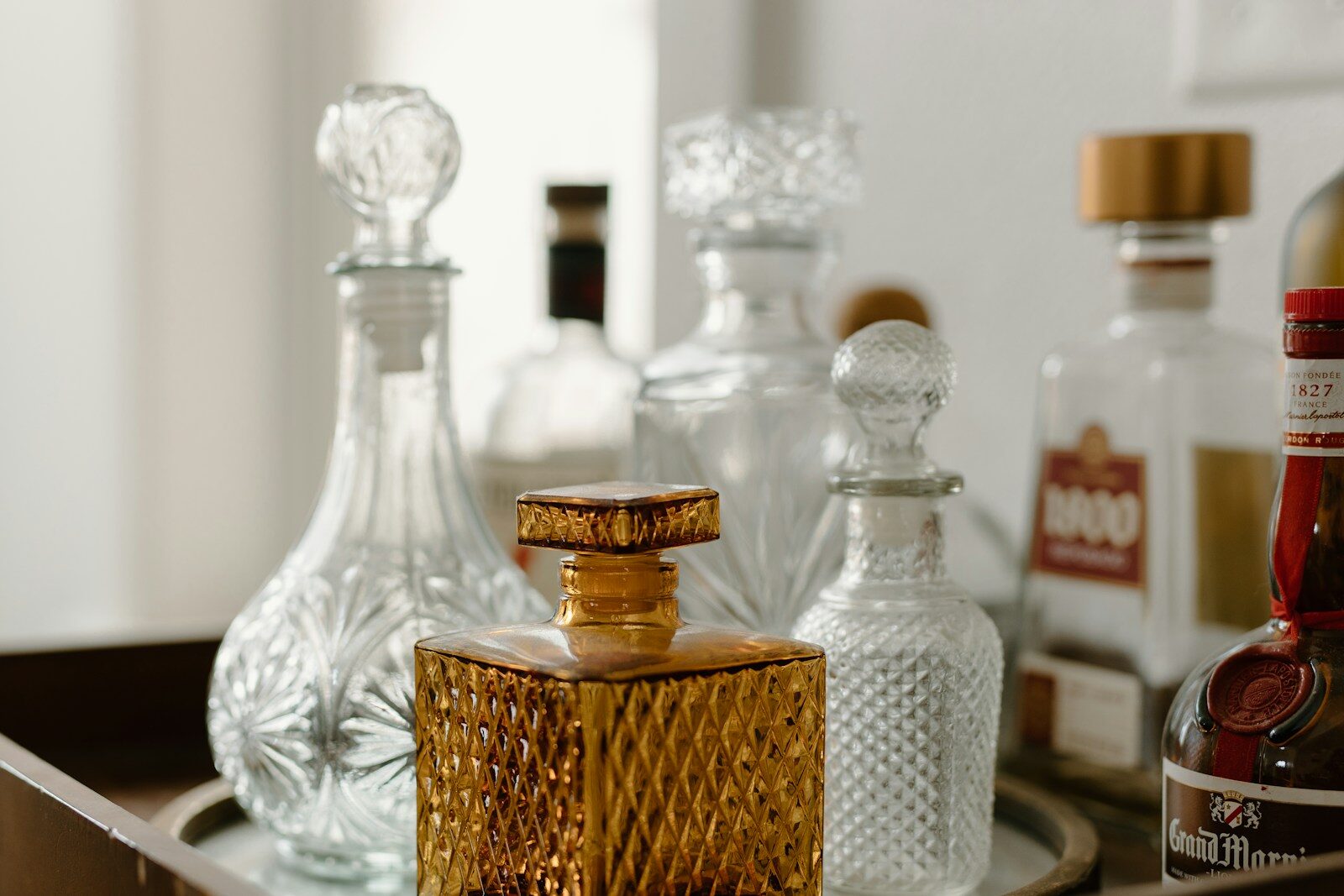
Four to six glasses in the styles you use most will cover many small gatherings. Vintage shops and estate sales can be excellent places to find distinctive glassware. A matching set looks polished, but a thoughtful mix often feels more personal.
Organize bottles by type and frequency of use. Keep everyday spirits within easy reach and move specialty bottles toward the back. Place tools in a container or tray so you are not searching for the jigger while everyone watches.
A washable tray under the bottles will catch drips. Store covered ice so it does not absorb freezer odors. For guidance on keeping refrigerated mixers and garnishes fresh, consult the federal FoodKeeper storage resource.
For more ways to make guests comfortable, visit our entertaining ideas.
Create a Short Menu for Easier Entertaining
A home bar becomes easier to use when you know what you can make. Choose three to five house drinks that share ingredients.
A Margarita and Daiquiri both use lime juice and a sweetener. A Manhattan and Old Fashioned can share whiskey, bitters, and garnish. Overlapping ingredients reduce waste while giving guests meaningful choices.
Include at least one alcohol-free option. Tonic, ginger beer, citrus, sparkling water, fresh herbs, and flavored syrups can create a drink that feels just as festive as a cocktail. Serve it in attractive glassware and add a proper garnish.
Keep drinking water visible and offer food when serving alcohol. A jigger also helps you understand how much alcohol goes into each glass. In the United States, 1.5 ounces of an 80-proof distilled spirit counts as one standard drink, according to the National Institute on Alcohol Abuse and Alcoholism.
You do not need fancy bartending tricks to make people feel welcome. Learn a few dependable recipes, measure carefully, and pay attention to your guests. A polished cocktail is lovely, but thoughtful hospitality is what people remember.
Give Your Home Bar a Story
The most memorable home bars are rarely the largest. They are the ones that reveal something about the people who live there.
Add a framed print, a favorite cocktail book, or a small bowl collected during a trip. Display a bottle with a good story behind it. Use coasters that make you smile. These details turn a group of supplies into part of your home.
Keep the display edited. Too many decorations can crowd the work surface and make the bar difficult to use. Leave enough room to measure, pour, garnish, and serve a drink without moving six decorative objects first.
Take care of the practical details, too. Clean shakers, strainers, and citrus tools after every use. Check juices, syrups, garnishes, opened wine, and vermouth regularly. Store liquor bottles upright and away from heat and sunlight.
You can find more inspiration in our home and lifestyle stories. Choose ideas that complement your space instead of trying to recreate someone else’s bar exactly. The most inviting setup will always be the one that feels at home in your home.
A Better Home Bar Starts Small
If you remember one thing, let it be this: build around what you enjoy, not what you think an impressive home bar should contain.
Choose a practical location. Buy a few flexible spirits and mixers. Invest in tools that make preparation easier, then organize everything so you can use it without a scavenger hunt. Add new bottles and glassware as your interests grow.
Your first setup may be a small tray with tequila, limes, and two good glasses. That still counts. Over time, it might become a vintage cart, a well-loved cabinet, or a built-in space where friends and family gather.
The bottles matter, but they are not the heart of it. A better home bar creates room for conversation, connection, and the occasional excellent cocktail. Start with what you have, pour something you enjoy, and make space for someone you love.
